The Sunday letter · Mara LinIssue 01081522283337404345474848
Afterword.
Opening the journal
Notes
Field notes from a June morning
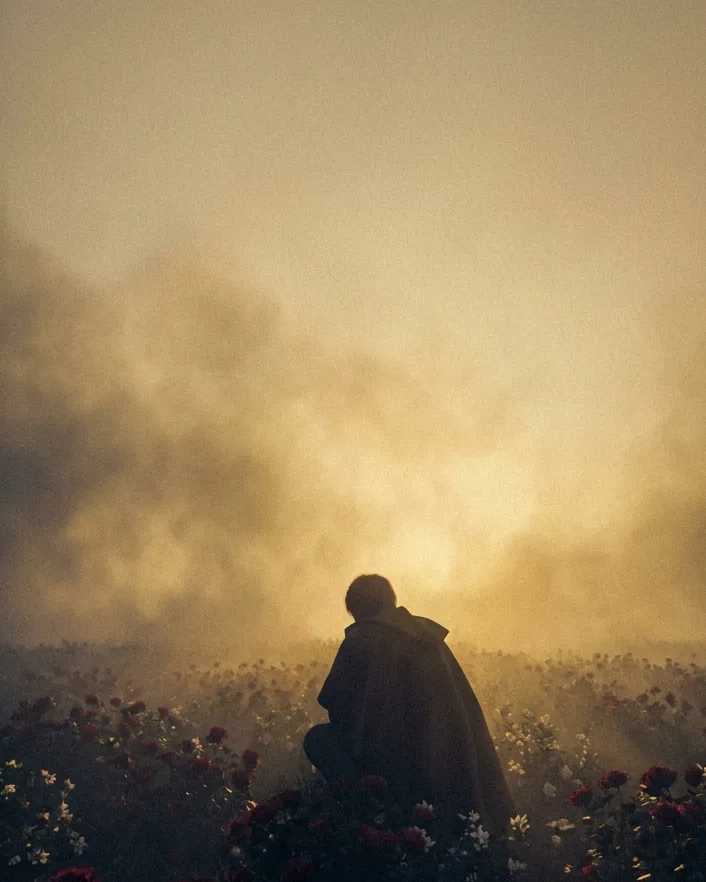
Fog, roses and the hour before anyone else is awake.
- KindNotes
- DateJul 06, 2026
- Read time4 min
Notes
Field notes from a June morning
Fog, roses and the hour before anyone else is awake.
- KindNotes
- DateJul 06, 2026
- Read time4 min
Notes
Field notes from a June morning
Fog, roses and the hour before anyone else is awake.
- KindNotes
- DateJul 06, 2026
- Read time4 min
NotesJul 06, 20264 min read
I went out to photograph the roses and came back with a page of sentences instead. These are the field notes from one June morning, written between half past four and seven, before anyone else in the street was awake.
4.30
Fog so thick the end of the road has gone. The street lamps are still on and look embarrassed about it. A blackbird starts, stops, starts again, as if checking whether anyone is listening. I am.
5.10
The roses in the next garden are heavy with water. Every one is bent towards the path. I take three photographs and none of them are any good, because the fog makes everything the same soft grey, and the camera does not know where to look. I put it away and take out the notebook.
“Some mornings will not be photographed. They can only be written down, and only if you do it before the sun burns them off.
5.45
A fox crosses the end of the street, unhurried, the colour of wet brick. It stops, looks at me for a long time, and decides I am not interesting. It is probably right.
The fog is lifting from the top down. The roofs appear first, then the chimneys, then the upper windows, as if someone were slowly raising a curtain on a stage with no actors yet.
6.20
The first car. The first door. A man in slippers takes his bins out and nods at me without surprise, as if people sitting on garden walls at dawn with notebooks were normal on this street. Perhaps they are.
7.00
The sun is through. The roses have lost their silver and gone back to being pink, which is lovely but ordinary. The blackbird has stopped. I walk home with wet shoes and a page full of notes, and I feel the particular happiness of having seen something nobody else saw.
I never did get the photograph. But I have this, and reading it back now, months later, I can still smell the wet earth and hear the bird checking whether anyone was listening.
— Mara
All essays

NotesJul 06, 20264 min read
I went out to photograph the roses and came back with a page of sentences instead. These are the field notes from one June morning, written between half past four and seven, before anyone else in the street was awake.
4.30
Fog so thick the end of the road has gone. The street lamps are still on and look embarrassed about it. A blackbird starts, stops, starts again, as if checking whether anyone is listening. I am.
5.10
The roses in the next garden are heavy with water. Every one is bent towards the path. I take three photographs and none of them are any good, because the fog makes everything the same soft grey, and the camera does not know where to look. I put it away and take out the notebook.
“Some mornings will not be photographed. They can only be written down, and only if you do it before the sun burns them off.
5.45
A fox crosses the end of the street, unhurried, the colour of wet brick. It stops, looks at me for a long time, and decides I am not interesting. It is probably right.
The fog is lifting from the top down. The roofs appear first, then the chimneys, then the upper windows, as if someone were slowly raising a curtain on a stage with no actors yet.
6.20
The first car. The first door. A man in slippers takes his bins out and nods at me without surprise, as if people sitting on garden walls at dawn with notebooks were normal on this street. Perhaps they are.
7.00
The sun is through. The roses have lost their silver and gone back to being pink, which is lovely but ordinary. The blackbird has stopped. I walk home with wet shoes and a page full of notes, and I feel the particular happiness of having seen something nobody else saw.
I never did get the photograph. But I have this, and reading it back now, months later, I can still smell the wet earth and hear the bird checking whether anyone was listening.
— Mara
All essaysNotesJul 06, 20264 min read
I went out to photograph the roses and came back with a page of sentences instead. These are the field notes from one June morning, written between half past four and seven, before anyone else in the street was awake.
4.30
Fog so thick the end of the road has gone. The street lamps are still on and look embarrassed about it. A blackbird starts, stops, starts again, as if checking whether anyone is listening. I am.
5.10
The roses in the next garden are heavy with water. Every one is bent towards the path. I take three photographs and none of them are any good, because the fog makes everything the same soft grey, and the camera does not know where to look. I put it away and take out the notebook.
“Some mornings will not be photographed. They can only be written down, and only if you do it before the sun burns them off.
5.45
A fox crosses the end of the street, unhurried, the colour of wet brick. It stops, looks at me for a long time, and decides I am not interesting. It is probably right.
The fog is lifting from the top down. The roofs appear first, then the chimneys, then the upper windows, as if someone were slowly raising a curtain on a stage with no actors yet.
6.20
The first car. The first door. A man in slippers takes his bins out and nods at me without surprise, as if people sitting on garden walls at dawn with notebooks were normal on this street. Perhaps they are.
7.00
The sun is through. The roses have lost their silver and gone back to being pink, which is lovely but ordinary. The blackbird has stopped. I walk home with wet shoes and a page full of notes, and I feel the particular happiness of having seen something nobody else saw.
I never did get the photograph. But I have this, and reading it back now, months later, I can still smell the wet earth and hear the bird checking whether anyone was listening.
— Mara
All essays